

Follow Us!


Who Adheres More to the One-Drop Rule?
The one-drop rule figures prominently in One Drop of Love (it’s part of the inspiration for the title!). This article on salon.com suggests that people with conservative ideologies tend to identify people as ‘black,’ even if they appear ‘racially ambiguous’ more than liberals. I’ve felt equal-opportunity pressure to adhere to the one-drop rule, though. How about you? http://www.salon.com/2013/06/
Posted in Journal
Comments Off
Performing ‘Race’ and Challenging Racism
It is an exciting time to be an actor, when the notion of ‘performance’ is taking on new meanings and has the potential to change the way we view the art form. Traditional definitions of ‘performance’ include the act of staging or presenting a play; a rendering of a dramatic role. Now scholar/activists like Judith Butler are exploring a new definition of performance, or ‘performativity‘ - looking at how we use language and behavior to construct identity.
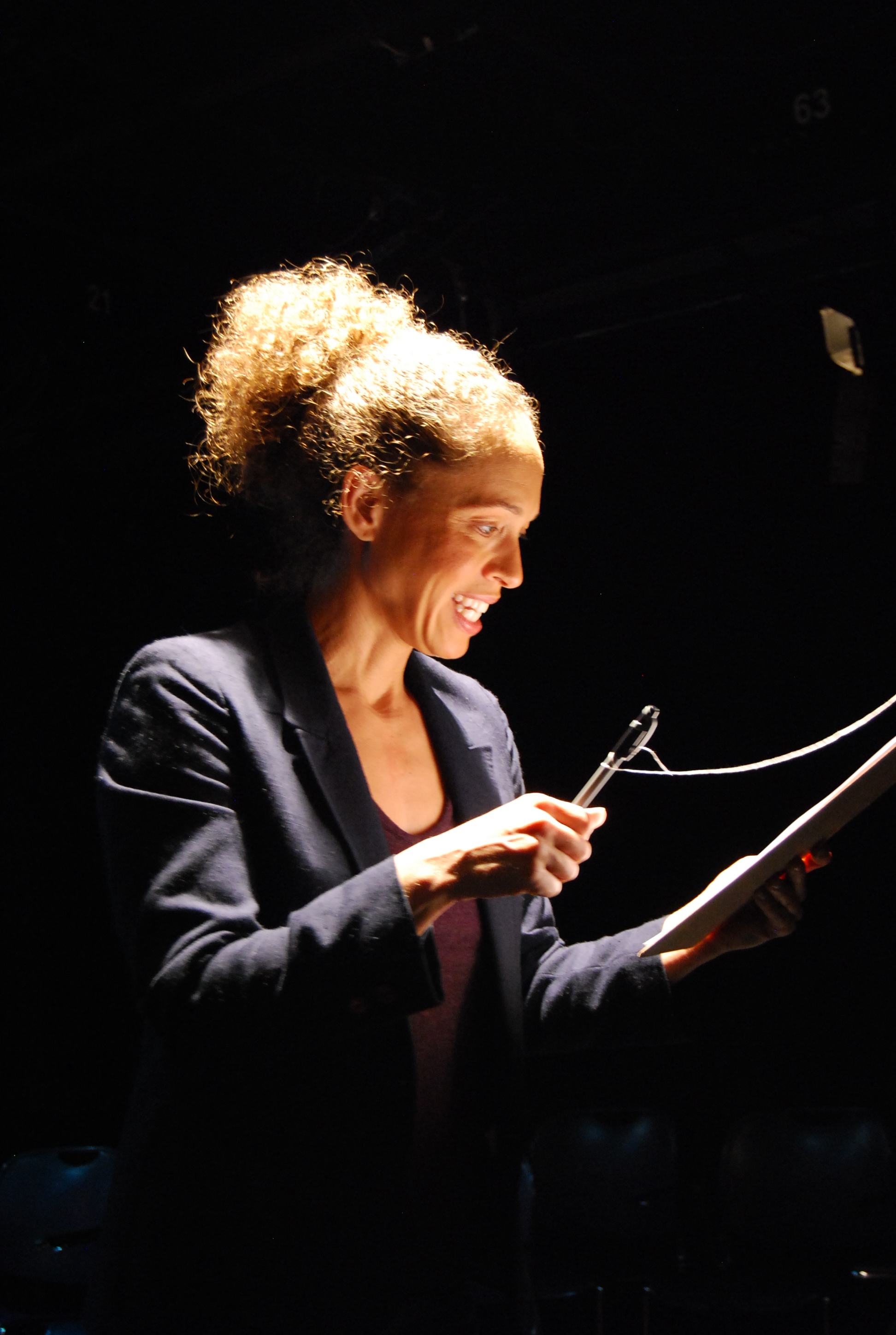
In my solo show, One Drop of Love, I get to meld these two understandings of performance. I am an actor who portrays several different characters: my Jamaican/Pan-Africanist father, my Blackfeet-Cherokee-Danish mother, candy and fruit vendors from East and West Africa, Census Workers from the 1790s to the present, racist cops from Cambridge, MA and many others. At the same time, in taking on these roles, I explore the construction of ’racial’ identity, and how these identities are created through speech and acts - and not through biology.
In 2006 I was going to marry the man of my dreams, and all I had left to do was call my father and ask him to walk me down the aisle. The thought of this call filled me with angst. I hadn’t witnessed my father interact in positive ways with ‘white’ people since my parents’ divorce in 1977. The man of my dreams (much to my own surprise) is European. After weeks of stewing, I finally convinced myself that this thing called ‘race’ was not going to get in the way of my joy. I made the call. And then my father did not attend our wedding.
One Drop of Love begins here and then journeys through time and space to examine the constructs and behaviors and speech acts that led to this moment. In the end, my father and I reach some sense of reconciliation, but questions about the influence of the one-drop rule, and how it affects our - and society’s - relationship to ‘race’ remain for me, my father, and the audience to continue to ponder. I know how privileged I am to be able to perform (in both senses of the word), and I plan to utilize that privilege to encourage complex conversations about ‘race’ and racism and use my chosen art form to create change.
Posted in Performance
1 Comment
The Value of a Dramaturg
I started attending CSULA theater performances the year before I applied to their MFA program. One of the first productions I attended was Evita - with the wonderful Whitney Tenney (who would later be my classmate) in the role of Evita. The first thing I noticed when I opened the program for the show was a long section of notes from the ‘Dramaturg.’ I have to admit, although I’d been involved in theater since I was young, I wasn’t entirely sure what ‘dramaturg’ meant. Reading these notes, though, gave me a whole new perspective on the show - and greatly enhanced my experience as a viewer.
Once I enrolled at CSULA and got cast in productions, many of our shows had dramaturgs - generally they were MA students in Theater who did vast amounts of research on the plays. They would attend rehearsals, make suggestions about our characters and plot lines based on their research, and would often create and post a display of some kind reflecting their research in the lobby during the show.
Playwriting can be a lonely experience for a while, especially when the story you’re telling is as personal as One Drop is for me. Writing the first few drafts I had no idea how the words would be received. Then, as I got closer to show time, I realized that I needed another perspective on the piece. My co-producer for the debut, Naomi Bennett, suggested I get in touch with a graduate of the MFA program, Dr. Alicia Tycer - who just happened to also be the dramaturg of that first show I saw, Evita. And she was incredible. We met shortly after I sent her the current draft and I was floored by how much she had already delved into and understood about the play. She shared specific notes and ideas about structure, character development, cultural context, set design and more. She then came to a number of rehearsals, continued to give productive advice - and created a lovely display for the lobby. Alicia and I will continue to work together to design curriculum materials for schools to use before and after the One Drop of Love performances. I am deeply indebted to her and highly recommend that all playwrights seek the support and nurturing of a dramaturg.
*see this blogpost & the comments for more info on, and the confusion caused by the term dramaturg: http://meadhunter.blogspot.com/2010/05/dramaturg-vs-dramaturge.html
Posted in Performance, Writing
Comments Off
Set & Light Design
In our first production meeting Set Designer, Heather Fipps, pitched a really lovely idea of using flats and screens for the various slides I use in One Drop. In the center would be a sexless face based on the different characters that morphs as I change from one to the next. We would also have two screens on either side for the informational text and graphic slides. In the end, though, we decided not to use the face and instead will only have the slides on one screen in upstage center. Jillian and I thought the face might end up being a distraction for the audience - and we didn’t want them to have to switch back & forth from one side to the other to get information from the slides. The next hurdle was getting one screen that would be big enough to project the images and slides. The school doesn’t have one that suits our needs, so this will be my first major purchase for the show. I’m getting a 7′x10′ screen that can be projected both from the rear and front.
Next I had to think about lights. I had no idea how to speak to Morgan, our Lighting Designer, about how the show should be lit - having never been in a position of thinking of the overall visual look of a show! My Director Jillian suggested I comb through the script for tone. I sent Morgan a list of ideas and character descriptions like, ‘He’s generally warm, but in this moment should feel technical and cold.’ I thought about which characters would be represented by amber, red and blue and sent that along as well. To my amazement he understood what I wrote!
Monday, March 4 we put all of this together for the start of our Tech rehearsals. I know I have a really talented team behind me - and although there are often tears and anxiety during Tech week, I’m confident that this one is going to go smoothly.
Posted in Performance
Comments Off
7 dialects
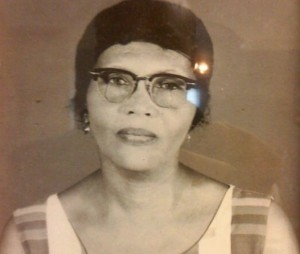
My grandma Cynthia’s passport photo from the 60s
I really love doing dialects, but I can’t just turn them on and off easily the way some folks can. I’ve done entire plays in different dialects convincingly, but if someone asks me to ‘do’ an accent when I’m not in character, I get flustered.
In One Drop of Love I play characters from Cape Verde, Kenya, Jamaica, Washington, D.C., Boston, China and Thailand. Fortunately I’ve had personal experiences with everyone in the play, so I was comfortable writing their dialects. But keeping these all separated, while distinguishing the characters physically and vocally will take some mental-stamina.
One of my favorite resources for dialect work is the International Dialects of English Archive. They have hundreds of samples of people reading from the same text, ‘Comma Gets a Cure’ and they provide you with lots of demographic information about the speaker as well. Even if you’re not an actor, the samples on the site are really fascinating. Check it out!
Posted in Performance
Comments Off
‘Exercise’ your mind
Rehearsals for the solo show begin Monday February 11th, which means my weekday schedule will be:
9:30AM-12:00PM teach
1:00PM-4PM rehearse
6:00PM-10PM teach
It’s going to be inSANE, but the most important thing I can do for myself is to add physical and spiritual exercise to this schedule. I have a wonderful gym (woman-owned!) near my home (if you’re in the LA area, check them out: All About You Boot Camp), so I’ll be doing that at 8 in morning to get my day started. On days that I can’t make it to bootcamp and on the weekends, I’ve got my favorite yoga video: Total Yoga.
Any other suggestions for how to maintain the mindful mind I’ll need to get through these next few weeks are much, much appreciated!
Posted in Journal
Comments Off
Keep on learning…
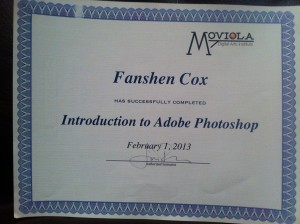 I was very fortunate to do an internship at Moviola last year. After putting in 320 hours of answering phones, scheduling students in classes and filling the coffee pots - I am now entitled to take most of their classes for free! I’ve already taken two Avid classes, and last night I finished the first of two Photoshop classes. Next I’ll take an After Effects class. Though I don’t plan to be an editor, or a photographer, my goal for when I go into production on the documentary is to have some knowledge of each aspect of the filmmaking process. I believe the more that everyone involved knows, the more we get to stretch and play and be free to create.
Posted in Documentary
Comments Off
Throw your stories in the air…
After last week’s readings, Ricky Pak, a fellow MFA student, suggested I take each of the mini-stories within One Drop and write them on an index card. I then take those index cards, throw them up in the air and let them land - and then run the show in THAT order to see what I learn.
I’m still about a week and a half away from getting the show up on its feet in a rehearsal, but I’ve already put Ricky’s suggestion to good use. In completing this latest draft, I’m throwing the cards up a few times and reading the play in its new order to see where it takes me. It’s a perfect exercise to help me stay open before I have to set the story for light and sound cues and other set considerations.
Posted in Performance, Writing
Comments Off